Sky Ranch Sanctuary

A Horse Rescue Organization

  • About Sky Ranch
  • Our Horses
  • What’s New
  • Resources
  • Contact
  • Donate

Jun 02 2019

Sheldon Recovered!


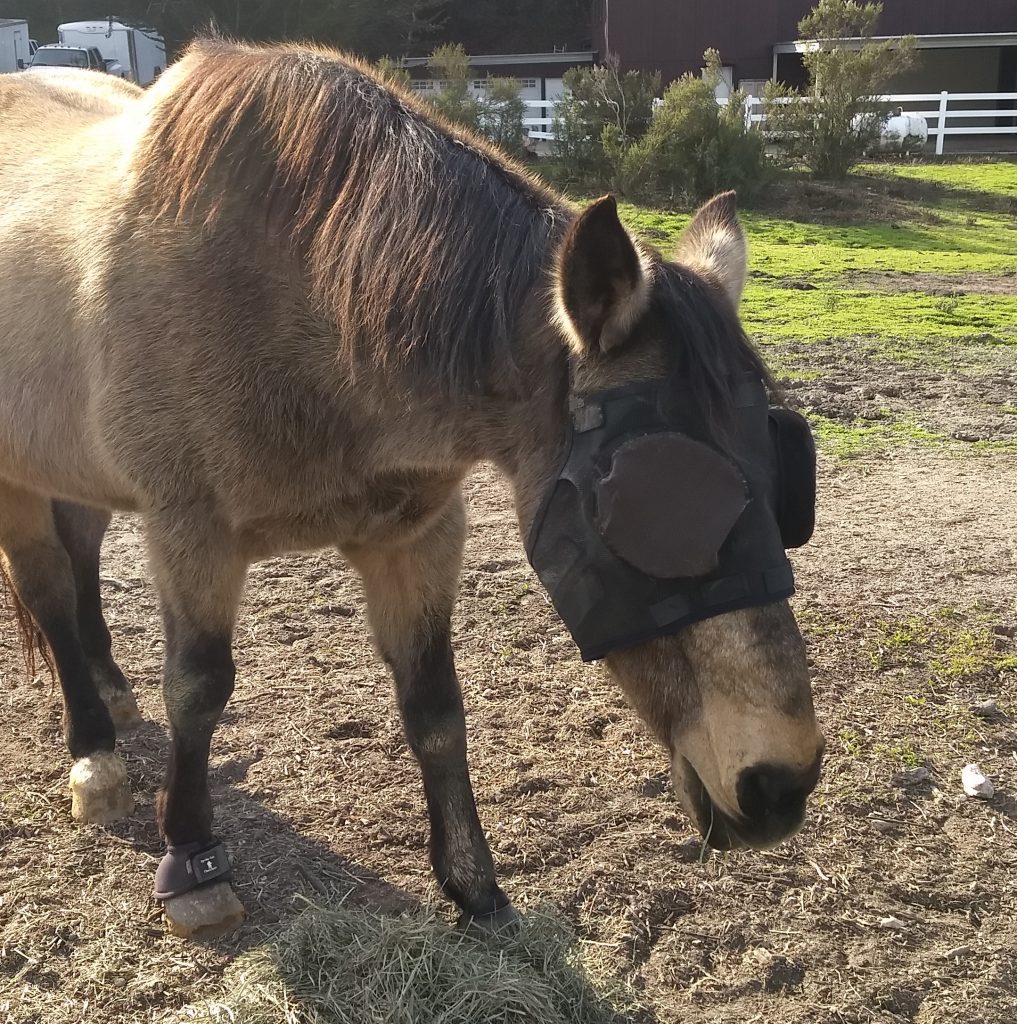
A few months back I described Sheldon’s “Equine Head Shaking Condition” and included a photo of him in his “special mask.”  Things got worse. A horse’s head weighs approximately ten percent of its body weight. At approximately 900 pounds, Sheldon’s head probably weighs in the area of 90 pounds. And since his head is on the large side proportionally, it may weigh more! With his head shaking condition, he was tossing that weight around reflexively, and it was becoming more and more dangerous for us to even get a halter on him. He could have inadvertently knocked us out!

The mask wasn’t helping and seemed to aggravate him. Perhaps it was interfering with his vision. We were desperate. Then I saw an article in the magazine put out by Platinum Performance addressing the head shaking condition and promoting a product called Platinum Steady (free plug!). I consulted with our vet, and he suggested we try it.

Within a week of using the product we saw a marked improvement and today Sheldon exhibits no symptoms. He is happier and calmer..of course…and so are we! The head shaking is gone!

We are glad to move into summer with a healthier happier horse!

Wishing everyone…two legged and four legged…a fun and relaxing summer.
Written by skyranch · Categorized: On the Ranch, Resources, Sheldon

Jan 01 2019

Happy New Year!

Sky Ranch Sanctuary wants to wish all of you a very happy new year. Let’s hear it for positive changes in 2019!

The photo is of Sheldon in his new Guardian Mask. We think he looks like a rock star and very “L.A!”

A few months ago, Sheldon developed a condition called “Equine Head Shaking Syndrome.” It’s a puzzling condition that causes involuntary shaking of the head. There are several attributable causes, and it can be very difficult to treat successfully. One of the causes is sun sensitivity , and with Sheldon we definitely see some causation of symptoms in regard to being in the sun. He doesn’t exhibit the symptoms in the barn in the evening, and the symptoms don’t start till the morning sun has been up for awhile.

After an exam and consultation with our vet, we visited Dr. John Madigan’s website to look for solutions. Dr. Madigan, at UC Davis, has studied this condition and he recommends the Guardian Mask, which gives extra UV protection. The mask is expensive relative to a regular fly mask, but we wanted to give Sheldon the best protection we could, while still letting him enjoy his time out in the pasture. So far, though still exhibiting some milder symptoms, he seems to have improved, and we are thrilled. The condition can improve during the winter when the sun isn’t as intense, and sometimes the condition just goes away. Fingers crossed.

Thanks to everyone who responded to our 12 Days of Christmas holiday fund raiser. May all of us enjoy greener pastures in 2019!

Written by skyranch · Categorized: General, On the Ranch, Resources, Sheldon

Aug 05 2016

Money Saving Tip: Save Money, Keep Your Horse

You can save money by curbing your impulses. Even though you may want the thing that you want this very moment, it may not be the best way to save money. Is the item really necessary, or simply something you could do without (e.g. “Do I really need another halter and lead rope in a different color?”). If you in fact do need something, do some research and find out the best way to spend your money. While considering the base cost, also look at quality, longevity, and any further discounts that may be available.

horse-billAnd as always, never try to cut corners at the expense of your horse’s welfare.

Written by skyranch · Categorized: General, Resources

Jul 04 2016

Horses and the Heat: Fact vs. Fiction

Source – horsenetwork.com by Eleanor Kellon, VMD

Working horses in summer heat creates some significant welfare issues with consequences as severe as death. Research has provided some very valuable information but despite this there are still many myths and misconceptions. It isn’t only upper level performance/racing horses that are at risk. Serious dehydration and overheating can happen to any horse, especially with some of the misinformation out there.

horse-heat-tips-01

Never let a hot horse drink all they want, or drink cold water.

Consequences are said to range from colic to founder. This is false. The horse needs to drink as much as desired as soon as possible for maximal rehydration effect. Hot horses will drink from 2 to 5 gallons. If you restrict intake, they will lose some of the drive and will drink less overall.

horse-heat-tips-02

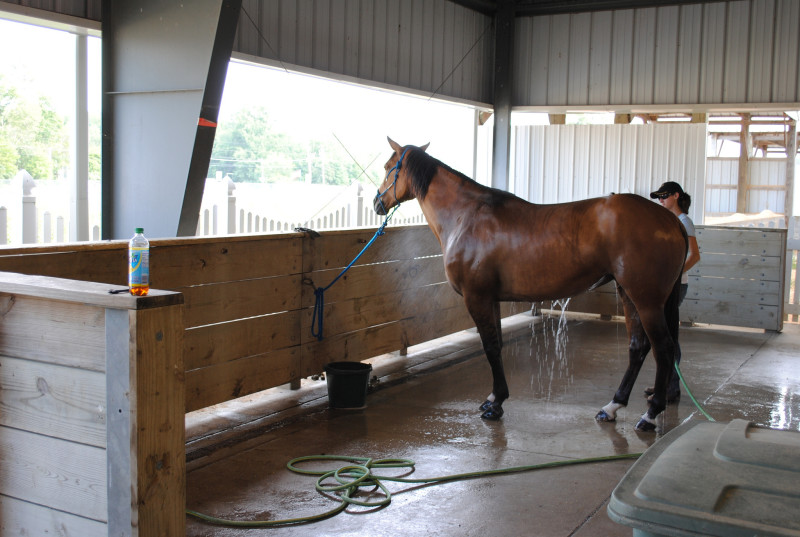
Never hose the horse with cold water.” or “Never put cold water over the large muscles.

Consequences are said to range from cramping or tying up to heart attack. Again,this is completely false. Body heat is quickly transferred to the water. The colder the wash water, the quicker the horse will cool down.

horse-heat-tips-03

Grain makes horses hotter (literally).

In other words, horses fed grain will overheat easier. The truth is that diet influences body temperature through the heat generated when foods are fermented in the large intestine. Since grains are primarily digested by enzymes in the small intestine, horses fed reasonable amounts of grain and therefore less hay will do less large intestinal fermentation and generate less heat in the intestinal tract.

horse-heat-tips-04

Only very fast/hard work can cause dangerous overheating.

Not quite. Heavy muscular activity does generate more heat but an important factor is how efficient the energy generation is. A fit horse can perform work generating much less heat that the same level of work would cause when unfit. A fat, unfit horse trotting up a long steep hill could be at more risk of overheating than a racehorse.’

horse-heat-tips-05

In hot weather you should switch from salt to an electrolyte supplement.

Wrong, and potentially dangerous. Sodium and chloride, which is salt, are the major electrolytes lost in sweat, followed by potassium. However, the horse has a baseline requirement for salt that is about 1 ounce (28.4 grams) per day even without sweating. This needs to be met first and a typical dose or serving of many electrolyte products does not supply even that much, let alone the baseline plus sweat losses. (For more details, see here.)

Unlimited water both inside and out, lots of salt and care not to work the horse beyond his level of fitness will help you successfully avoid the danger zone in hot weather.


All articles are for informational purposes only. Opinions expressed are not necessarily endorsed by Horse Network. Contact your local veterinarian if you have any questions regarding the health of your animals.  This article originally published at www.uckeleequine.com


Written by skyranch · Categorized: Resources · Tagged: heat and horses, horses in summer, overheating

Jun 25 2016

More Money Saving Tips

horse-bill

Ask for advice from an equine nutritionist. Many feed manufacturers have free helplines. Make sure you are spending your money on the best feeds and not overfeeding expensive supplements. And always remember never to try to cut corners at the expense of your horse.

Written by skyranch · Categorized: General, Resources

  • 1
  • 2
  • Next Page »

© Copyright 2026 Sky Ranch Sanctuary · All Rights Reserved
501(c)(3) Corporation  |  EIN# 46-2038629

LOGIN

Follow Sky Ranch on Facebook
Facebook